Touch
water installation · cymatics and gesture recognition · 2014–
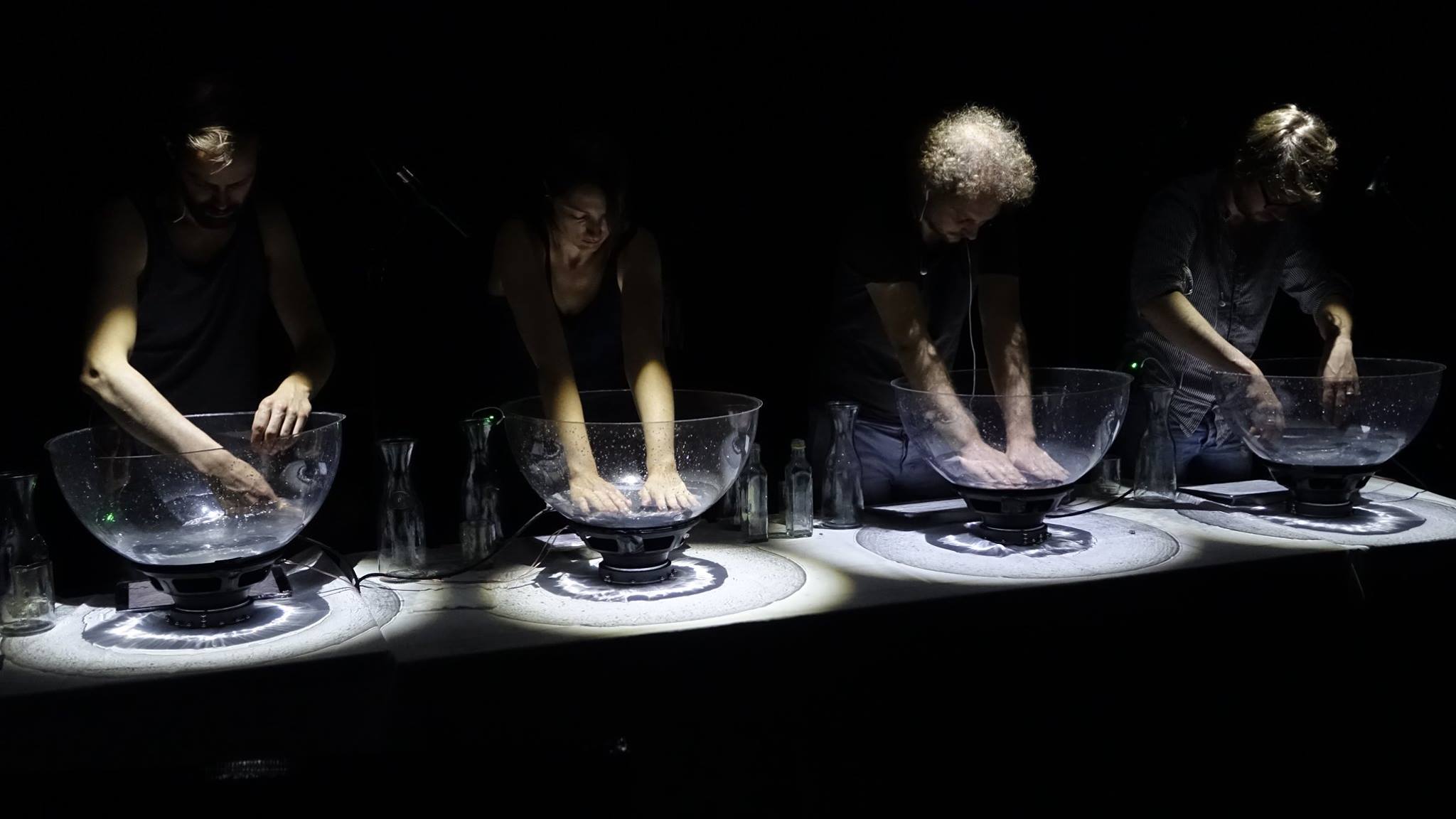
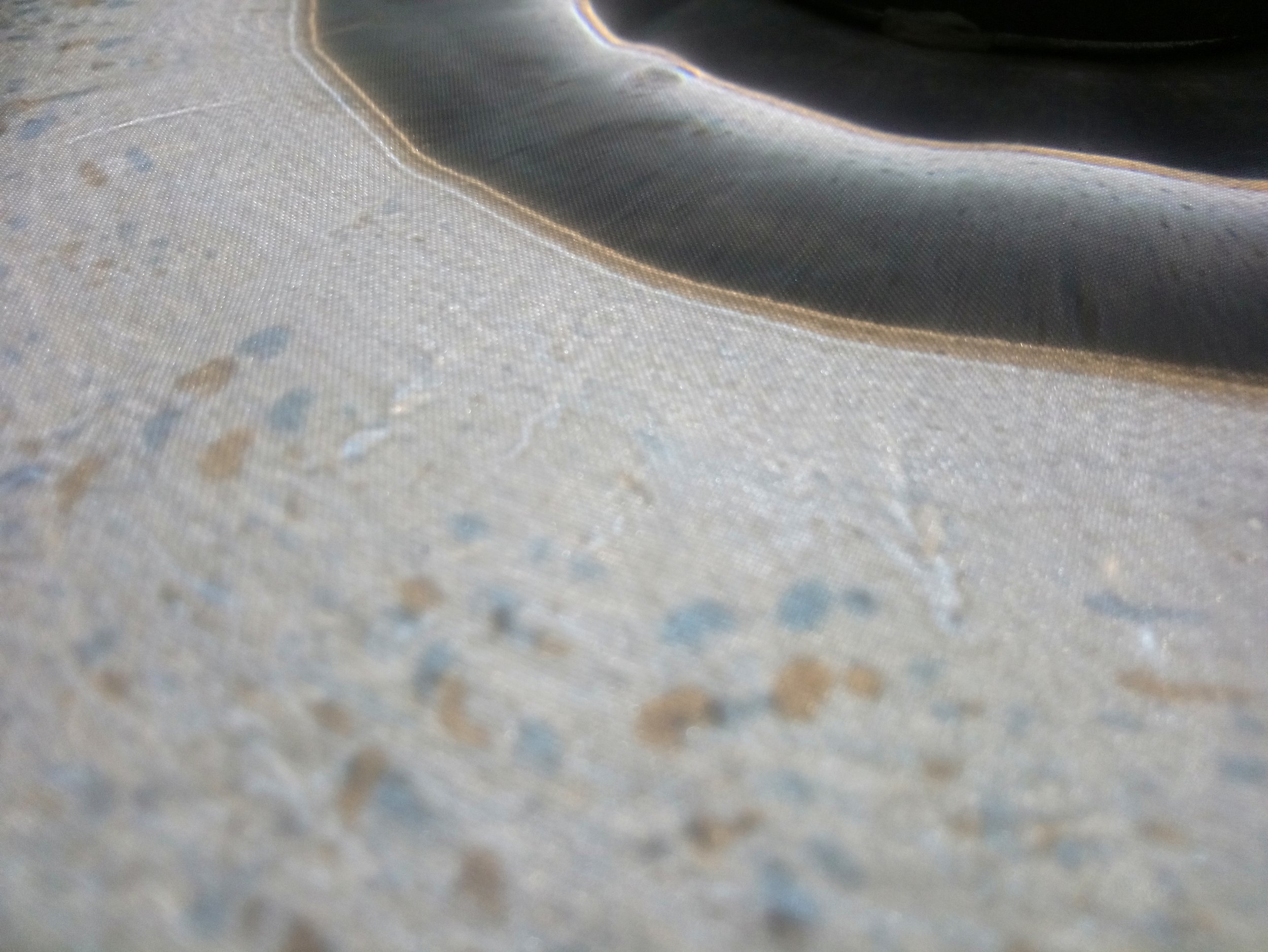
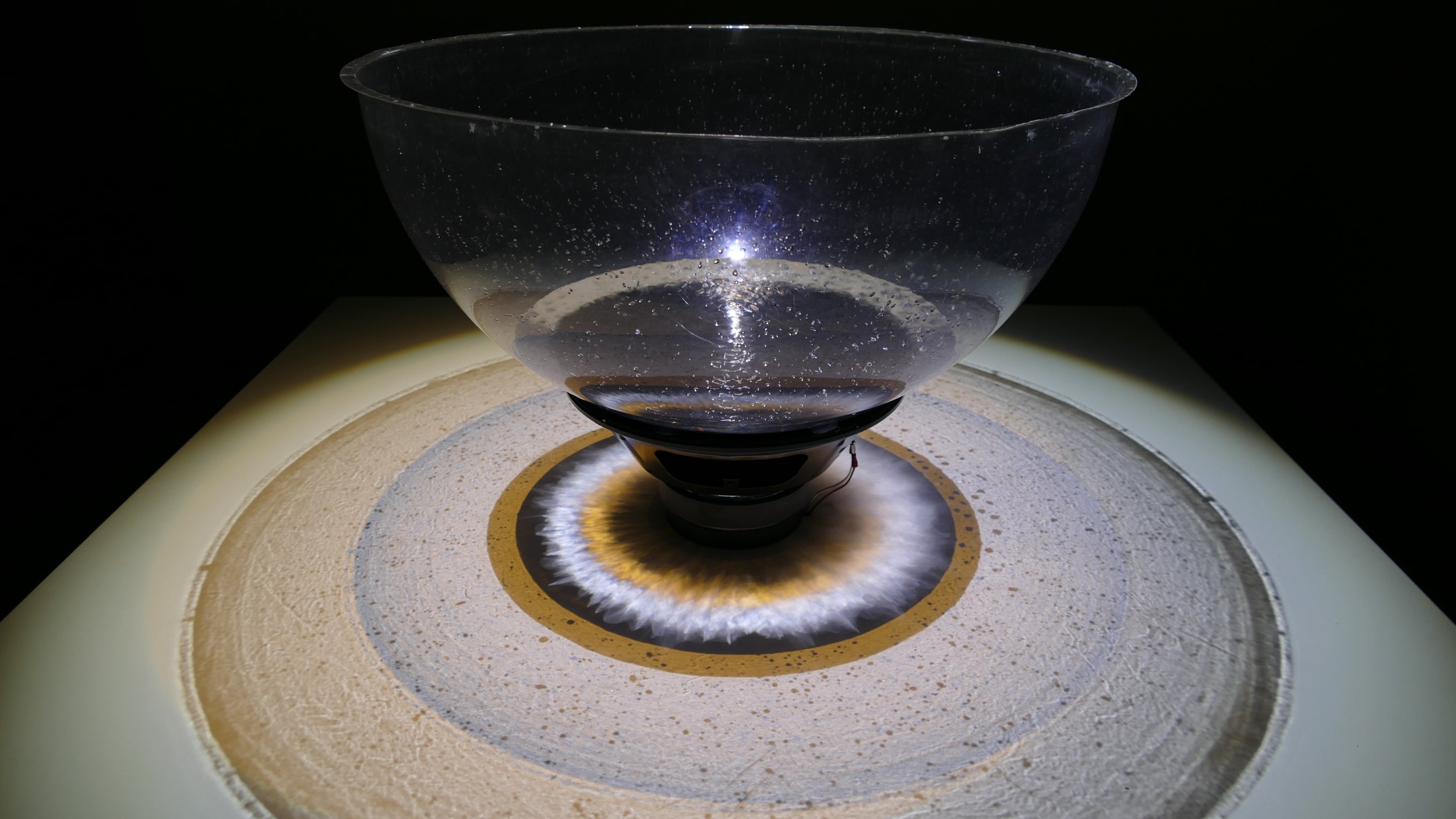
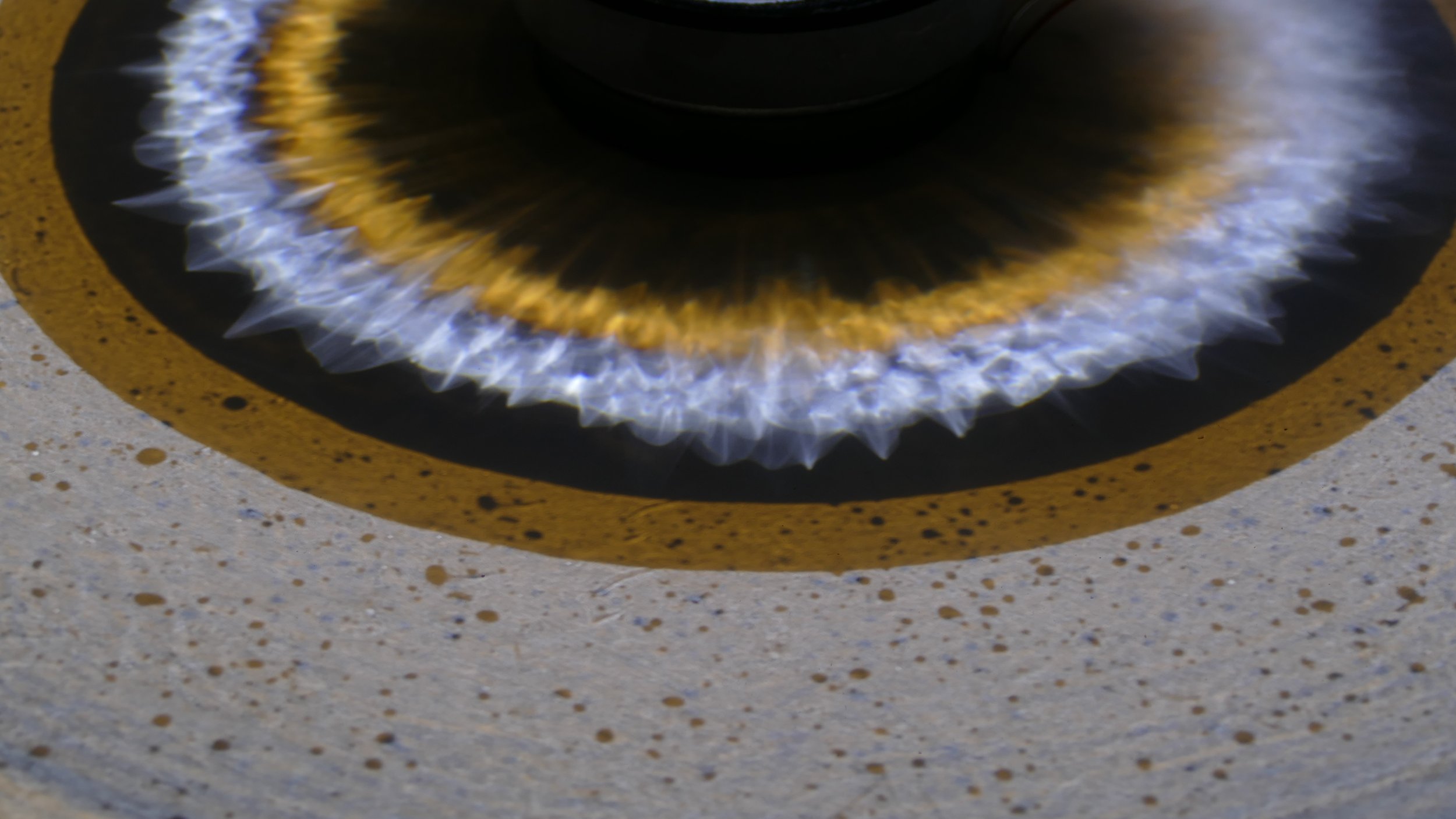
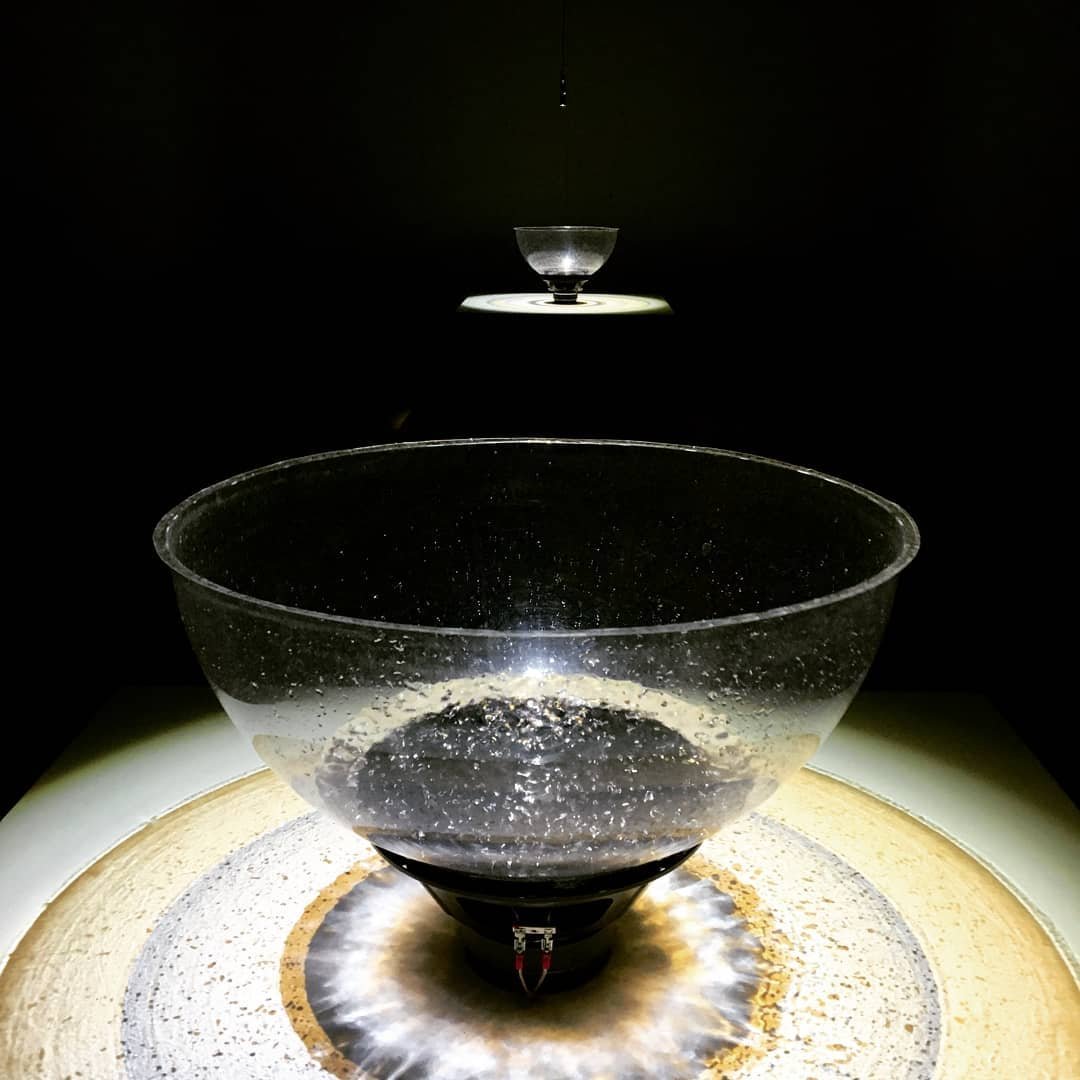
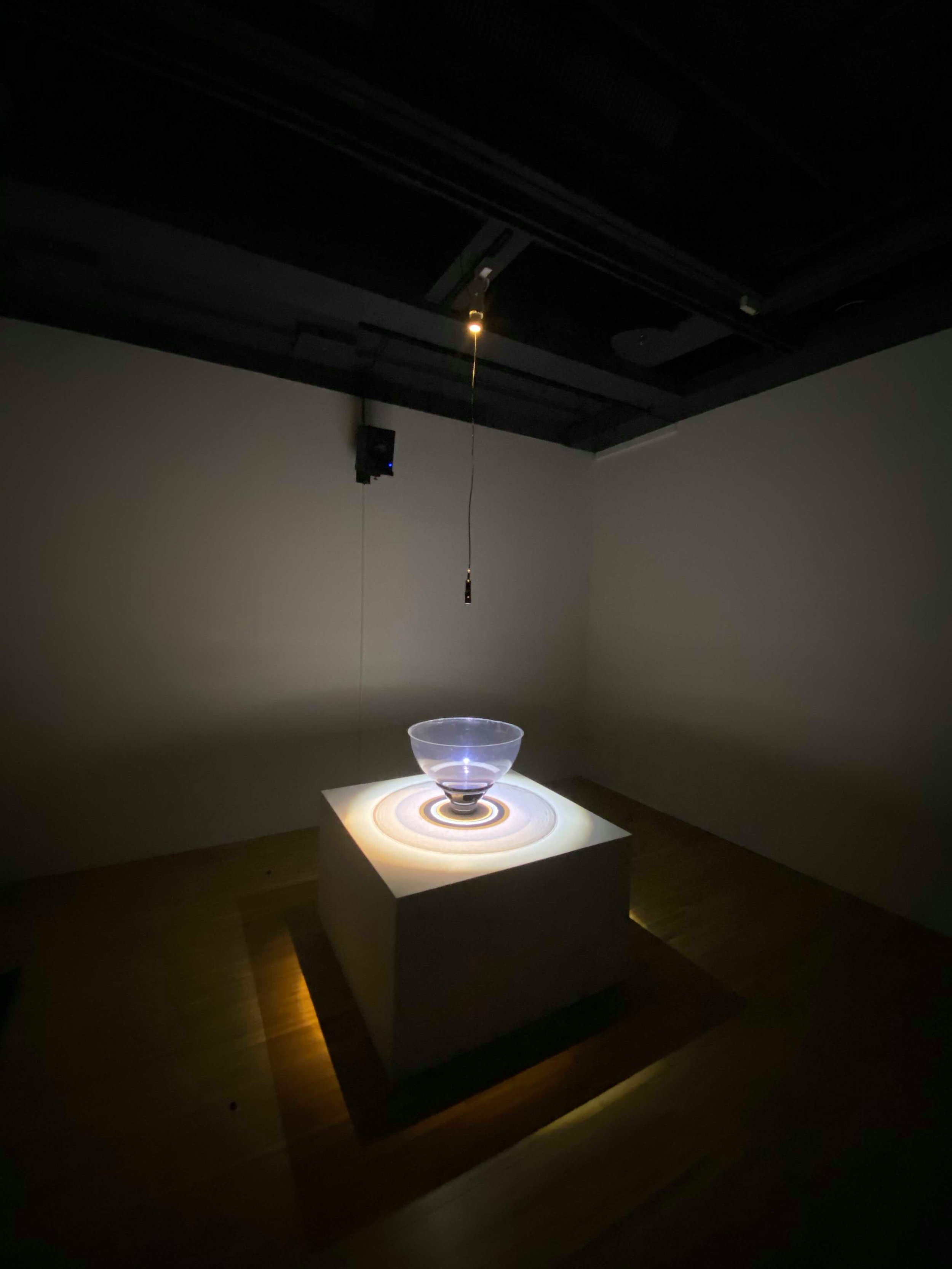
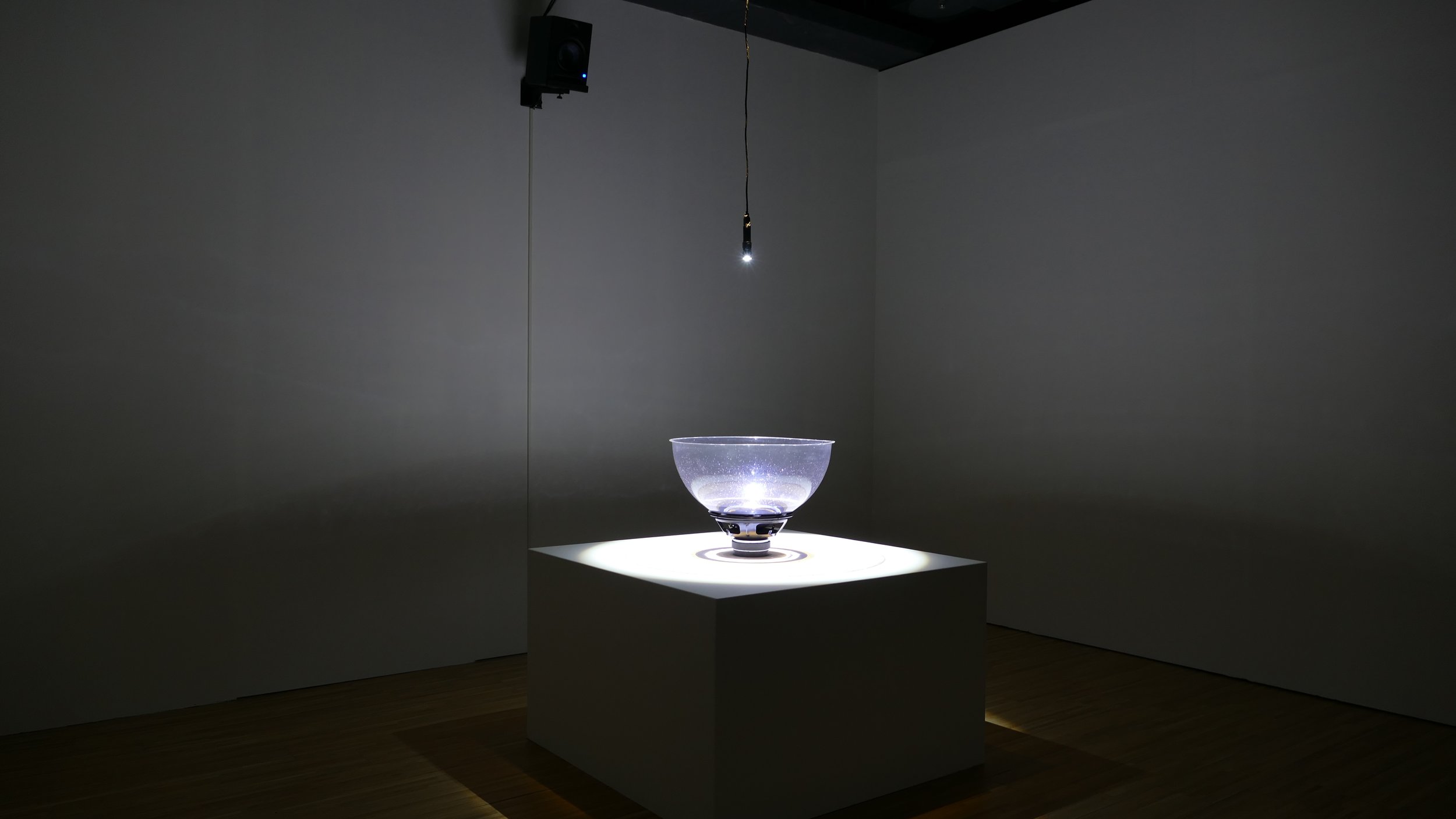
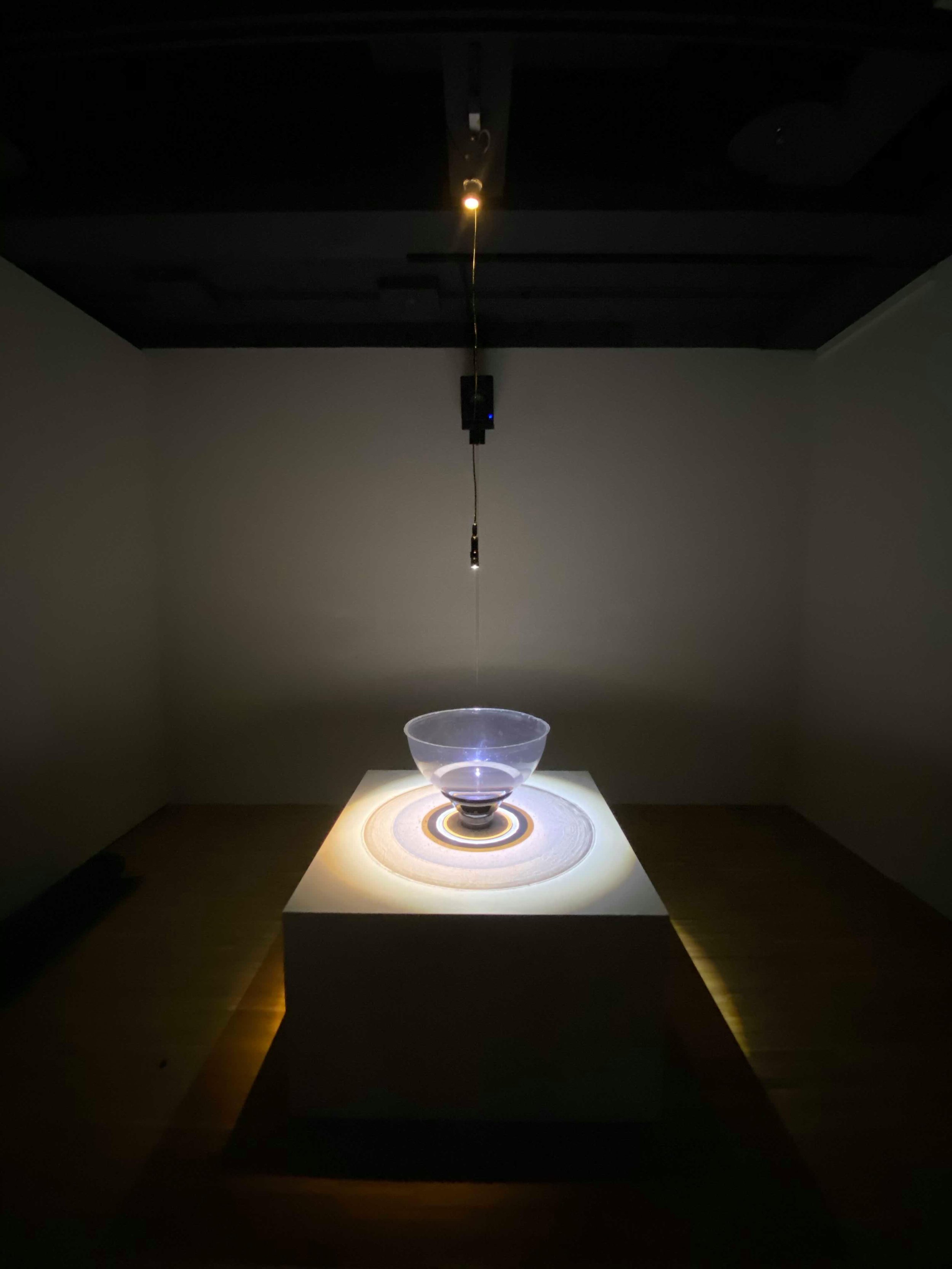
Shallow basins of water sit on subwoofers. Contact microphones on the basins pick up every touch, and the sound that comes back drives the water itself, so the vibration is visible as ripple and standing wave before it is heard. Built in Max/MSP with contact microphones, raw speakers, torches, and gesture recognition.
Research question — How can water be played? When a hand touches water, what sound does the meeting of the hand's touch and the water's response produce — and how do the ripples shape what we see and hear?
How it works
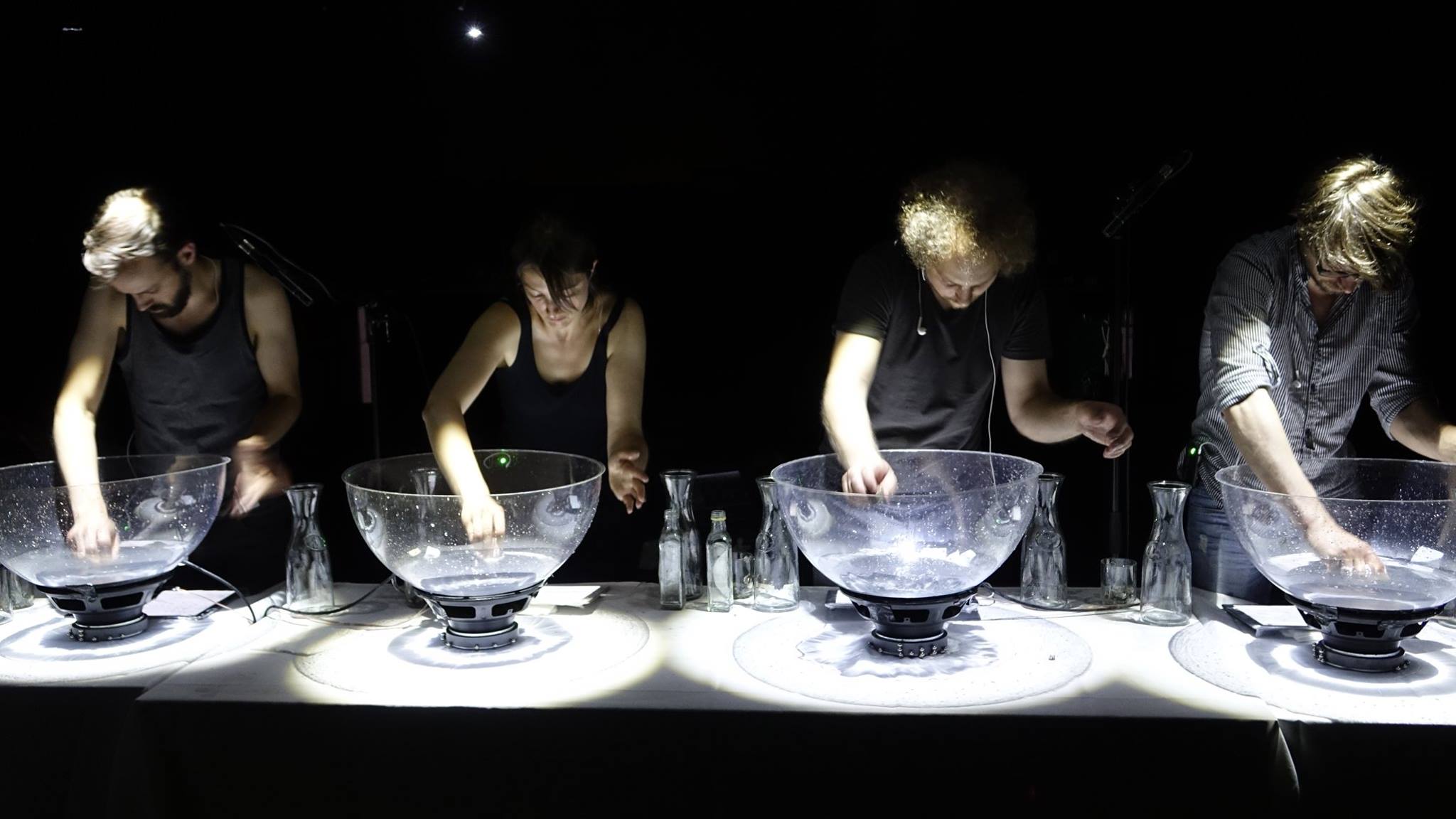
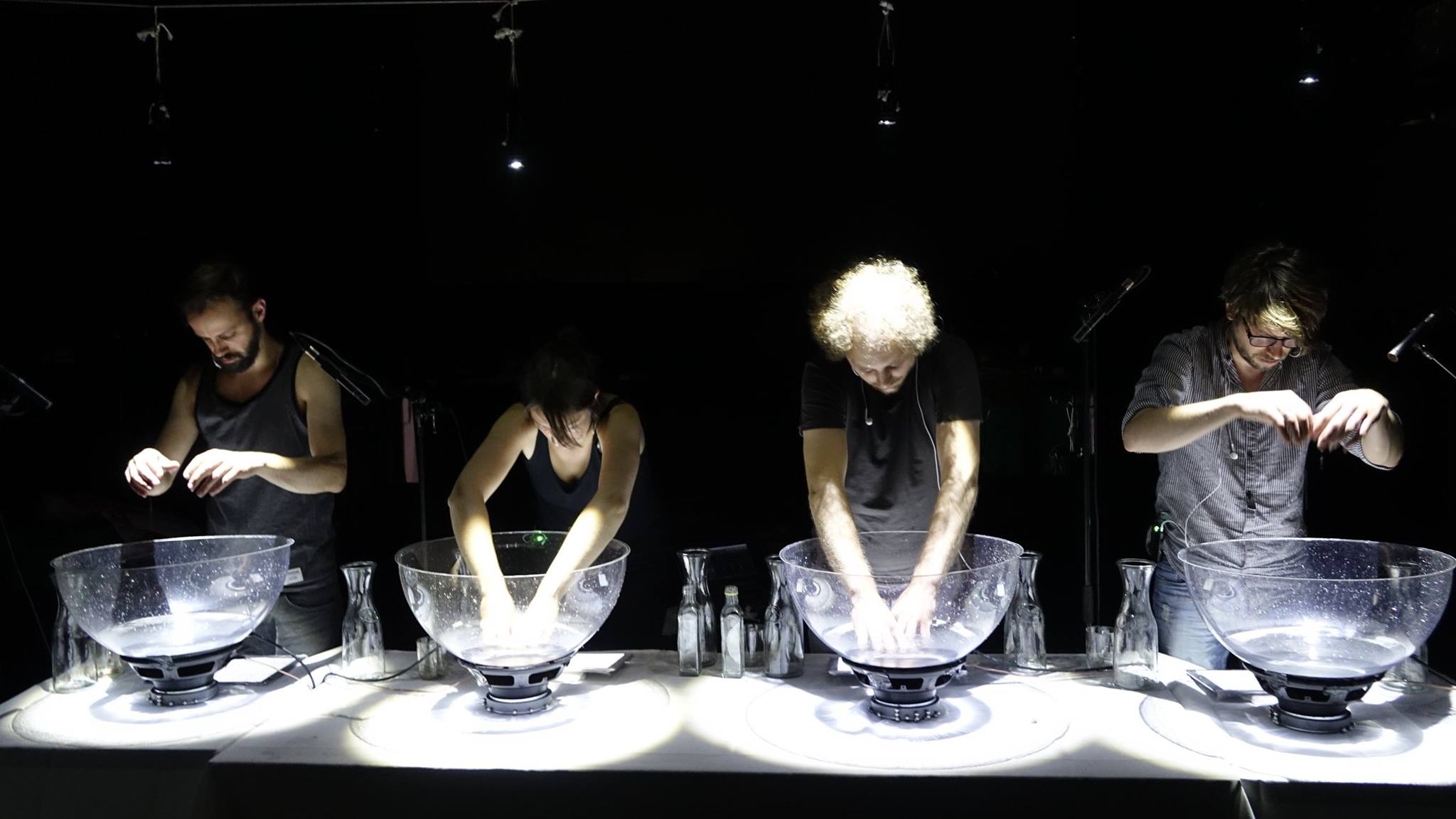
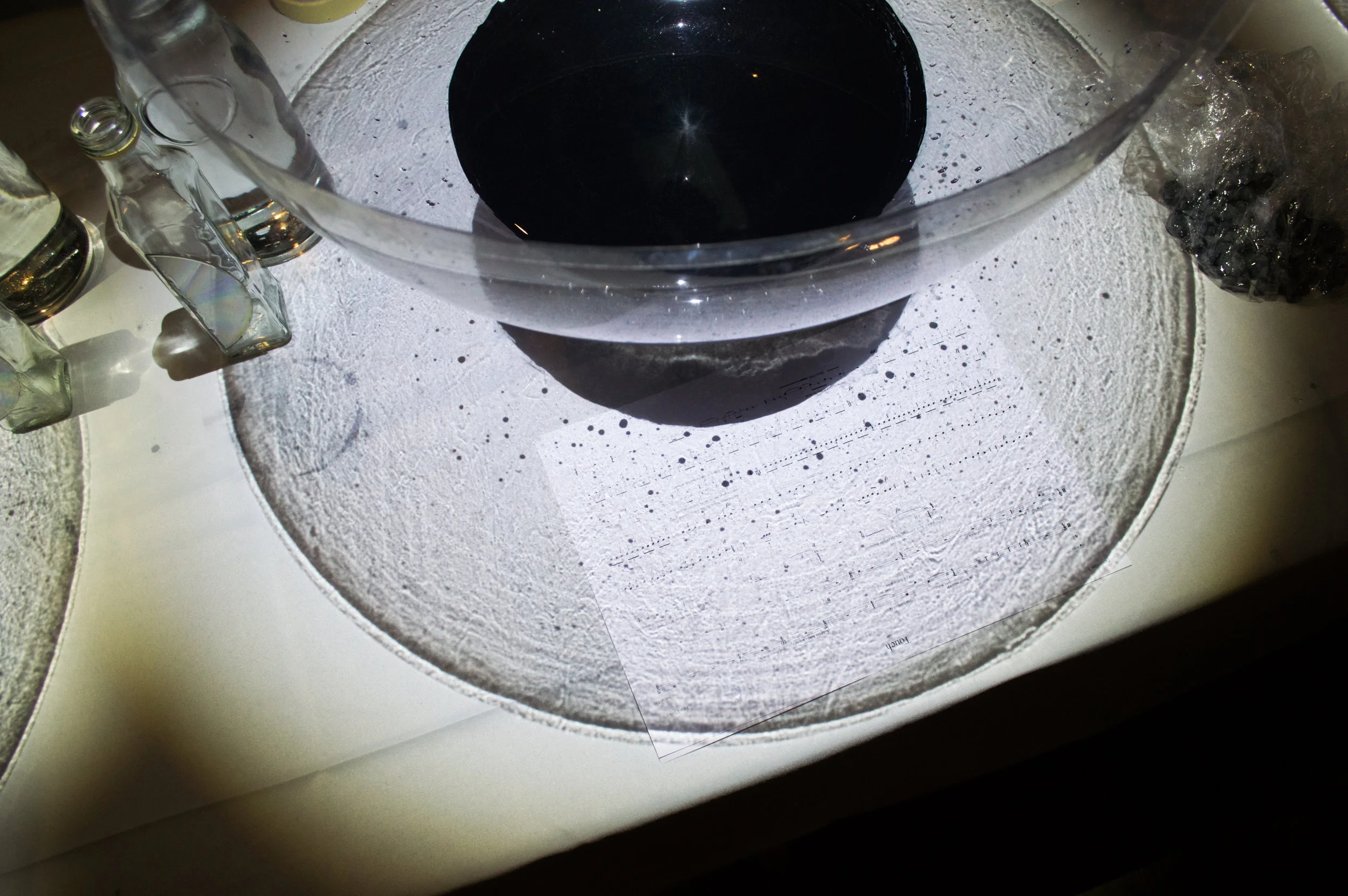
Each performer has one installation as their instrument: a large transparent basin of water resting on a subwoofer, with a contact microphone attached to the basin. When the performer touches the water or the basin, the microphone feeds the sound through the computer in real time, and the processed signal drives the speaker underneath, changing the ripples and the leaping of the water in the basin.
There are two layers of output. The speakers built into the installations carry the raw sound the microphones pick up — the amplified sound of the hand itself, with no electronic processing. The house speakers in the room carry the live electronics.
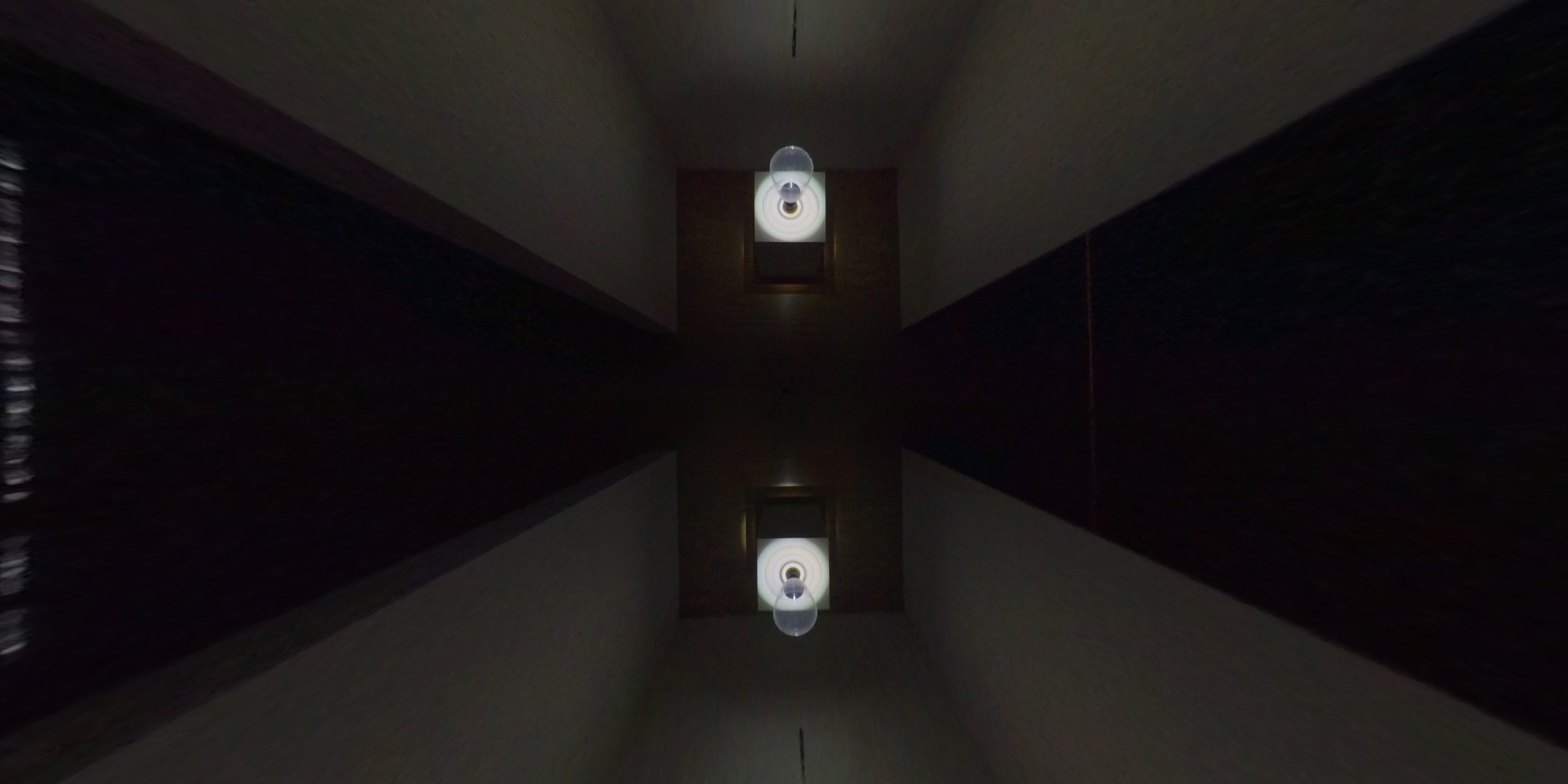
In the four-performer version, the installations are cross-routed rather than each feeding itself: input 1 goes out of installation 3, input 2 out of installation 4, input 3 out of installation 1, and input 4 out of installation 2. This makes two closed feedback loops — performers 1 and 3, performers 2 and 4. What one performer plays moves the water in front of another. The musical writing pairs 1 with 4 and 2 with 3, so the visual symmetry runs against the acoustic coupling.
Development
I began applying cymatics to performance in 2014, and destroyed a great many of the school's speakers and amplifier components while studying in Amsterdam. The first working water installations were realized at Darmstadt in 2016, as a four-performer prototype using speakers hauled from the Conservatorium and materials bought locally. The score at that stage was still a written text description, which let four players align their timings while leaving room for interpretation.
The complete four-performer version was written in 2017 at the invitation of We Spoke, who premiered it in Lausanne as Touché Nature. I still would not call that a finished work — it put every available material into one piece, and the development needed more time than it had.
The whole project was built from zero: hardware, software, notation, coordination, and execution all my own. That is why I know how far it can still go, and the possibilities are numerous enough that choosing among them is the actual work.